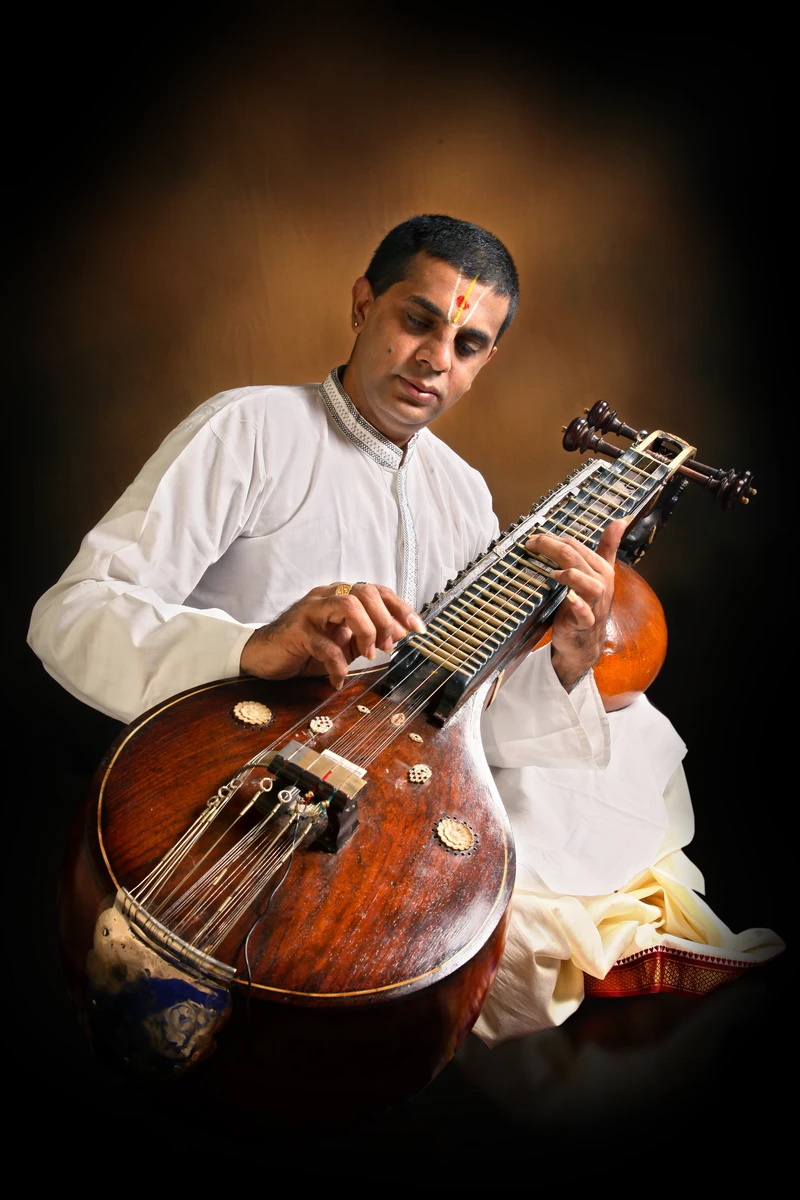
In the Carnatic tradition, the Saraswati Veena is rarely mastered through printed notation alone. Its subtleties are transmitted orally through Guru-Shishya Parampara—internalized through the ear and the fingers. Every performance is an intimate physical dialogue between the right hand, whose plucking discipline (meetu) articulates meter and timbre across the melody and drone strings (pakkasarani), and the left hand (viraladi), which deflects strings across fixed brass frets to coax vocal contours and microtonal oscillations (gamakas).
Over the centuries, this discipline crystallized into distinct regional schools (baanis or paddhatis), nurtured within South India’s royal courts and musical centers. The Mysore Baani, cultivated under the Wadiyar dynasty, is celebrated for its metric crispness, split-finger plucking (koota-meetu), and intricate mastery of multi-speed Tanam, preserved through masters like Veene Seshanna, Subbanna, and Dr. V. Doreswamy Iyengar. In the Kaveri delta, the Thanjavur Baani prioritized the gayaki idiom, using deep lateral string deflection to draw multiple swaras from a single fret, achieving the continuous vocal resonance (akhanda nada) epitomized by Veena Dhanammal and the Karaikudi lineage. In the northern coastal courts of Bobbili and Vizianagaram, the Andhra Paddhati developed agile upper-register fretwork, sparkling slides (jaru), and dynamic emotional phrasing, championed by Emani Sankara Sastry and Chitti Babu. Meanwhile, the Travancore Baani, shaped by Maharaja Swathi Tirunal’s court, favored a contemplative, unhurried tempo (vilamba kala) with understated attack, allowing the instrument’s natural acoustic sustain to unfold with devotional serenity.
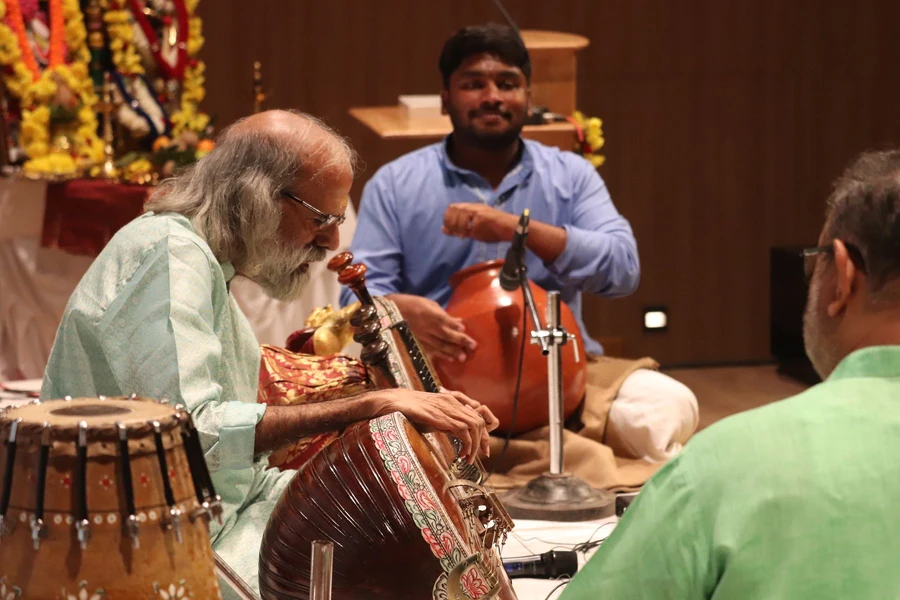
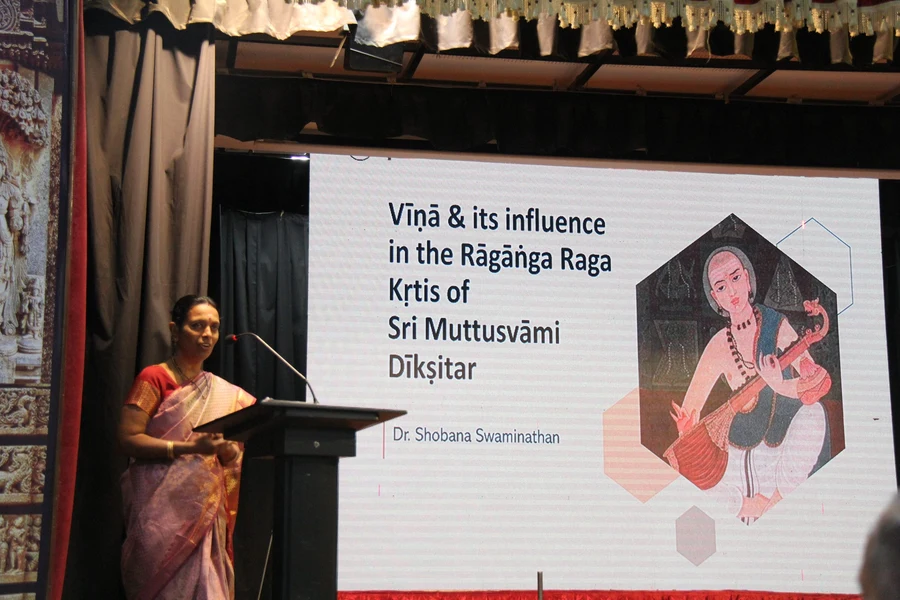
In an era where modern stage amplification and digital broadcasts often smooth regional idiosyncrasies into a uniform sound, Veena Tattva Prakashika provides a deliberate space for these lineages to retain their identity. Through full recitals and focused lecture-demonstrations, senior exponents and upcoming vainikas demonstrate the distinct plucking angles, deflection techniques, and repertoire that define their parampara—ensuring that the living diversity of the veena remains vibrant and accessible to the next generation.